Many newly established jewelry brands, as well as companies that previously operated in other industries and now wish to enter the jewelry sector, have asked us which material is most suitable for their designs to produce high-cost-performance, superior-quality jewelry with long-lasting color retention.
I’m Janey, one of the founders of Lucky Jewelry Factory . Established in 2005, Lucky Jewelry has been in the jewelry industry for more than 20 years ,Before founding Lucky Jewelry with my husband, we already had five years of working experience in the jewelry sector.
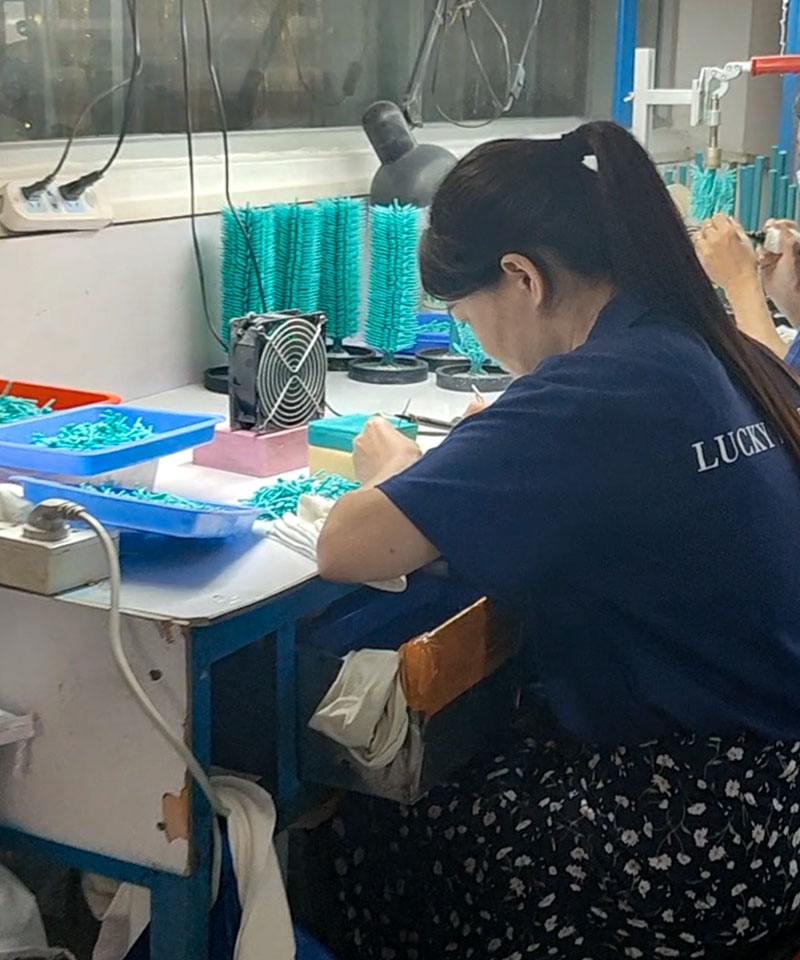
Our factory currently has two production lines: one specializes in waterproof stainless steel jewelry with PVD vacuum plating, and the other focuses on Jewelry made of brass and 925 sterling silver. Today, I’d like to share with you what I know about which materials are suitable for customizing different jewelry designs.
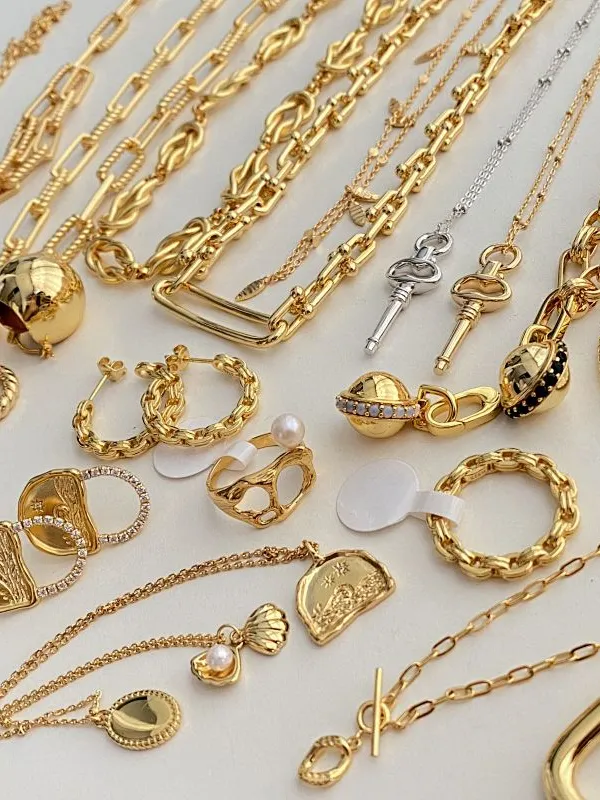
Stainless steel jewelry is waterproof, hypoallergenic and oxidation-resistant.with PVD plating, it complies with EU REACH regulations and passes US CPSIA testing and certification. It is well-suited for high-humidity and high-salt environments in Europe and America, making it ideal for everyday daily wear by people of all ages. At present, it is particularly popular among jewelry enthusiasts.
In fact, 10 years ago, most customers preferred jewelry made of brass and 925silver over stainless steel pieces over stainless steel jewelry. At that time, the craftsmanship for manufacturing stainless steel jewelry was still immature in many aspects. And ,the producing time is longer,furthermore, stainless steel is a relatively hard material with a cool metallic luster, which limited the production of jewelry with complex shapes and delicate patterns. It was only suitable for minimalist styles and textured men’s jewelry.
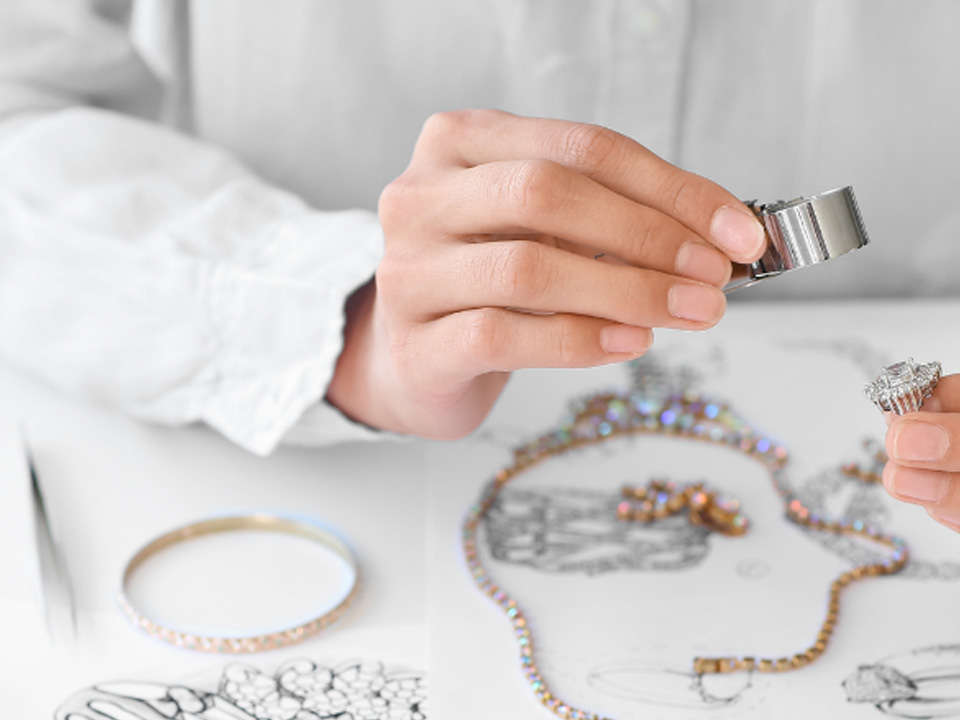
Brass has excellent ductility, low hardness, and is easy to shape into complex patterns and three-dimensional shapes. In particular, copper is extremely easy to inlay with various stones, such as zircon, natural stones, glass, etc., and the stones are not easy to fall off. It has low cost, and the craftsmanship for making jewelry is relatively free and mature. However, copper jewelry is prone to oxidation. Because the adhesion of the electroplating layer is relatively weak, it is easy to fade. After fading, it may cause allergies to sensitive skin. 925 silver has more advantages in making jewelry. Its luster is warm, delicate, and has a strong sense of premium. Its ductility is also better than that of stainless steel. Moreover, it belongs to a category of precious metals, with collection and recycling value, which conforms to the aesthetics of European and American consumers for “light luxury jewelry”. It is suitable for creating classic styles, heritage styles, and gift styles. However, because pure silver has relatively active chemical properties, it is prone to oxidation and blackening when it comes into contact with sulfides (air, sweat), requiring regular maintenance. In addition, the price of silver is easily affected by the international market, wars, and the emergence of some high-tech new things, resulting in relatively large cost fluctuations.
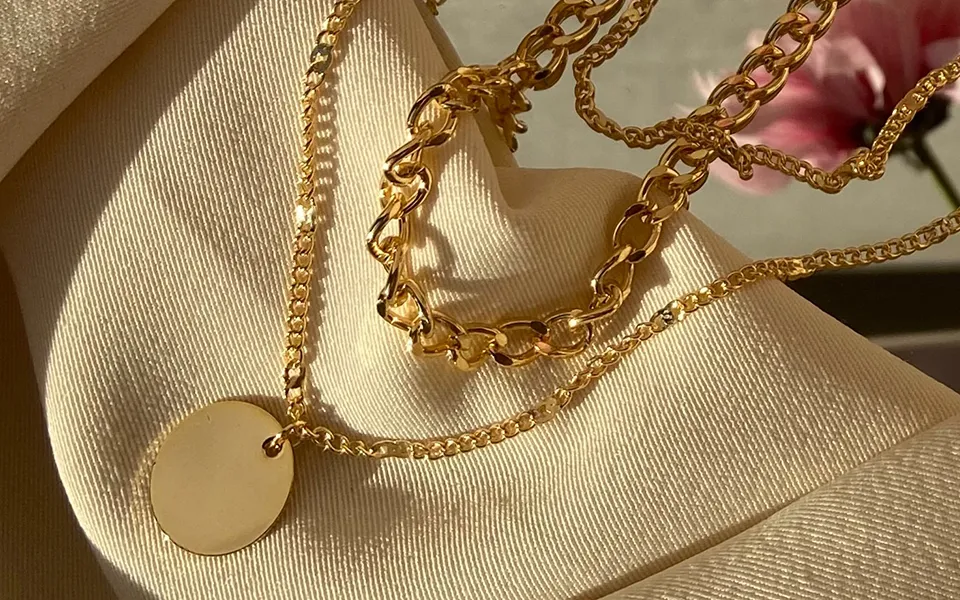
With social development, most consumers increasingly prefer simple, geometric jewelry for daily wear, suitable for all occasions and environments—whether exercising, working, staying at home, or attending parties. This helps save costs, so stainless steel jewelry has naturally become the top choice for its hypoallergenic property, waterproof and sweat-resistant features, PVD plating, durability and high cost-performance ratio.
However, if you want to customize jewelry with special and complex designs, prefer various stones set on jewelry or micro-pavé sparkling stones, and have low cost requirements, then brass material is the best option for you.
If you desire high-end and delicate jewelry, such as light luxury, classic, hypoallergenic and value-preserving micro-set gemstones as premium holiday gifts or gold-plated imitation styles, suitable for your high-end independent stores and upscale department store channels, 925 sterling silver can meet your needs.
Thank you all. In the next episode, I will share you with the differences in color retention time among stainless steel, brass and sterling silver jewelry. Can stainless steel jewelry really keep its color forever?